
Parents of multiple children know the challenge: what works for one child might not work for another. Photo-based personalised products can create unexpected sibling conflicts. But imagination-based personalised colouring books offer a more harmonious approach—one where each child gets exactly what they want, without compromise.
Fair for All
Each child gets their own personalised book
No Conflict
No fighting over photos or who's featured
Individual Choice
Each designs their own unique character
The Photo Problem with Siblings
Photo-based personalised products create unexpected challenges when you have multiple children.
"Why Is She in More Photos?"
Parents often have unequal photo collections of their children. Maybe you took more photos of your first child, or your younger child moves too much for clear shots. Maybe one child loves the camera while the other runs away from it.
When creating photo-based personalised products, these imbalances become visible:
- 📸 One child has better photos available
- 📊 Different numbers of suitable photos exist for each child
- ✨ Photo quality varies between siblings
- 😊 One child's personality shines through photos better
These differences can spark jealousy, hurt feelings, or complaints about fairness.
The "Matching Products" Dilemma
When you create matching personalised items for siblings, photo-based approaches force difficult choices:
- 🤔 Use the same photo theme for both? One child might look better than the other
- 🎨 Use different photos? Now they don't match
- 👥 Feature both children in one product? Whose name goes first?
No Fighting Over Photos
Imagination-based personalisation eliminates photo-related conflicts completely.
Everyone Starts Equal
With description-based books, every child begins from the same place:
- ✨ No photo quality differences: Both books use professional illustrations, so quality is identical
- 🎨 Equal creative input: Each child describes or designs their character with equal involvement
- ⭐ Same quality results: The final books have matching professional quality regardless of photography skills
- ⚖️ Fair personalisation: Each child's book is equally "theirs" without photo-based advantages
Photo-Shy Children Get Equal Treatment
Some children dislike being photographed. With traditional personalisation, these children might resist participating or feel uncomfortable with the final product.
Description-based books welcome photo-shy children equally. They can:
- 📝 Describe themselves without photo pressure
- 🦸 Design fantasy versions of themselves
- 😌 Participate comfortably without camera anxiety
- ⚖️ Feel just as represented as their siblings
Each Child Designs Their Own Character
One of the most powerful benefits of imagination-based books for siblings: each child gets complete creative control over their own character.
Individual Expression
Siblings are individuals with different interests, personalities, and imaginations. Description-based books honour these differences:
Example: Two Siblings, Two Different Approaches
Emma (Age 7):
Her choice: "I want to be a marine biologist exploring underwater with dolphins!"
Her book: Underwater theme with her as a scientist character, complete with diving gear and research equipment.
Jack (Age 5):
His choice: "I want to be a dinosaur scientist finding fossils!"
His book: Dinosaur discovery theme with him as a paleontologist, wearing a safari hat and carrying excavation tools.
Both children get exactly the book they wanted—no compromise, no disappointment.
Flexible Storytelling, Consistent Imagery
One of the benefits for siblings of different ages: you can create more complex storylines for older children while younger siblings enjoy simpler adventures—but it's important to understand how this works:
Understanding the Imagery
All colouring book themes feature imagery designed for ages 3-8. This means:
- 🎨 The line art complexity remains consistent: Whether you create a book for a 4-year-old or an 8-year-old, the colouring complexity and illustration style are similar
- 📖 Story complexity can vary: You can describe more detailed character backgrounds and motivations for older children, creating richer narratives
- 👦👧 Character age doesn't change visual complexity: A character described as age 9 won't have more intricate line art than one described as age 5—both will have child-friendly colouring book illustrations
For example: A 7-year-old might have a character who is a "brave space explorer searching for a lost alien civilization," while a 4-year-old might have "a friendly astronaut visiting planets." The narrative depth differs, but both will have similar age-appropriate space-themed illustrations suitable for colouring.
This consistency actually helps siblings of different ages colour together comfortably, as the books have similar visual complexity even when the stories differ in depth.
Real Examples: Siblings Adventuring Together
Here are real examples of colouring books created for siblings. Notice how each character maintains their unique personality while sharing adventures—from fairies in space to explorers in magical worlds.
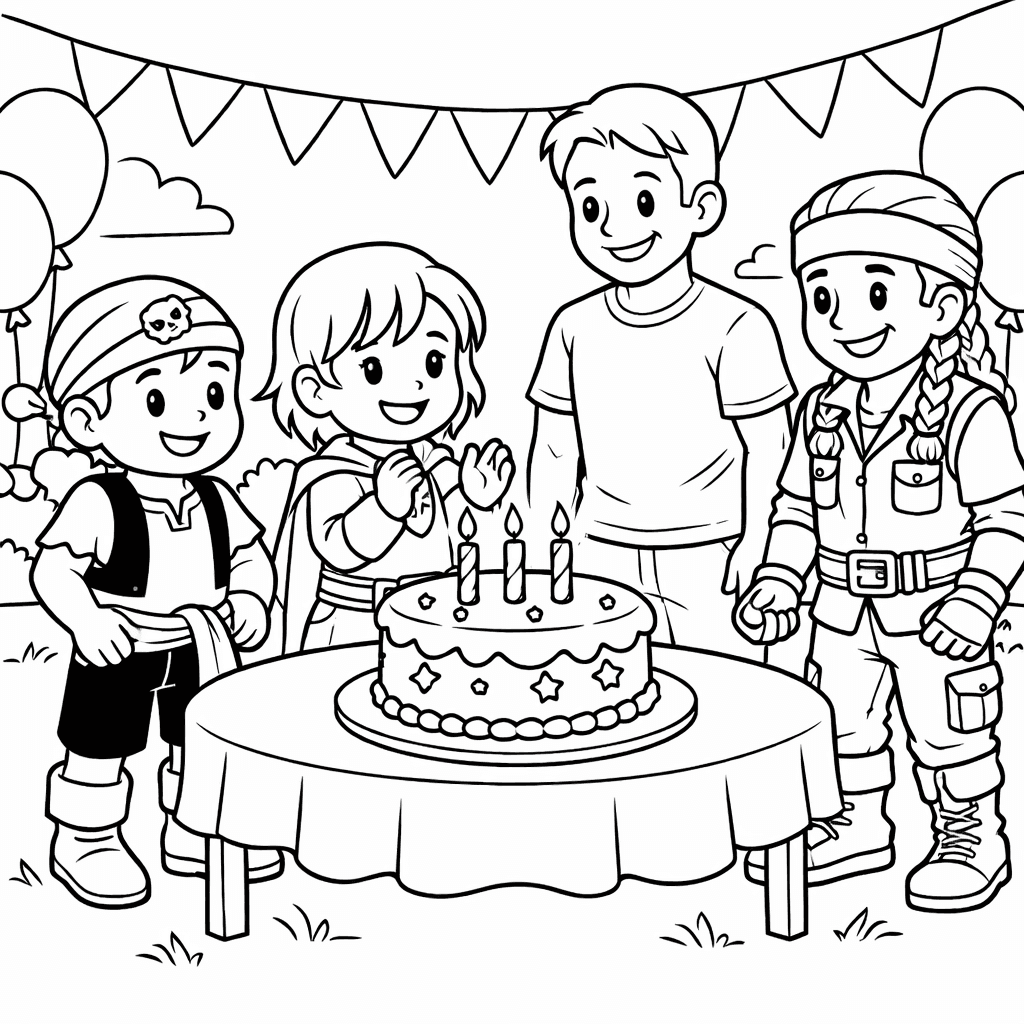
A family of four celebrating at a birthday party
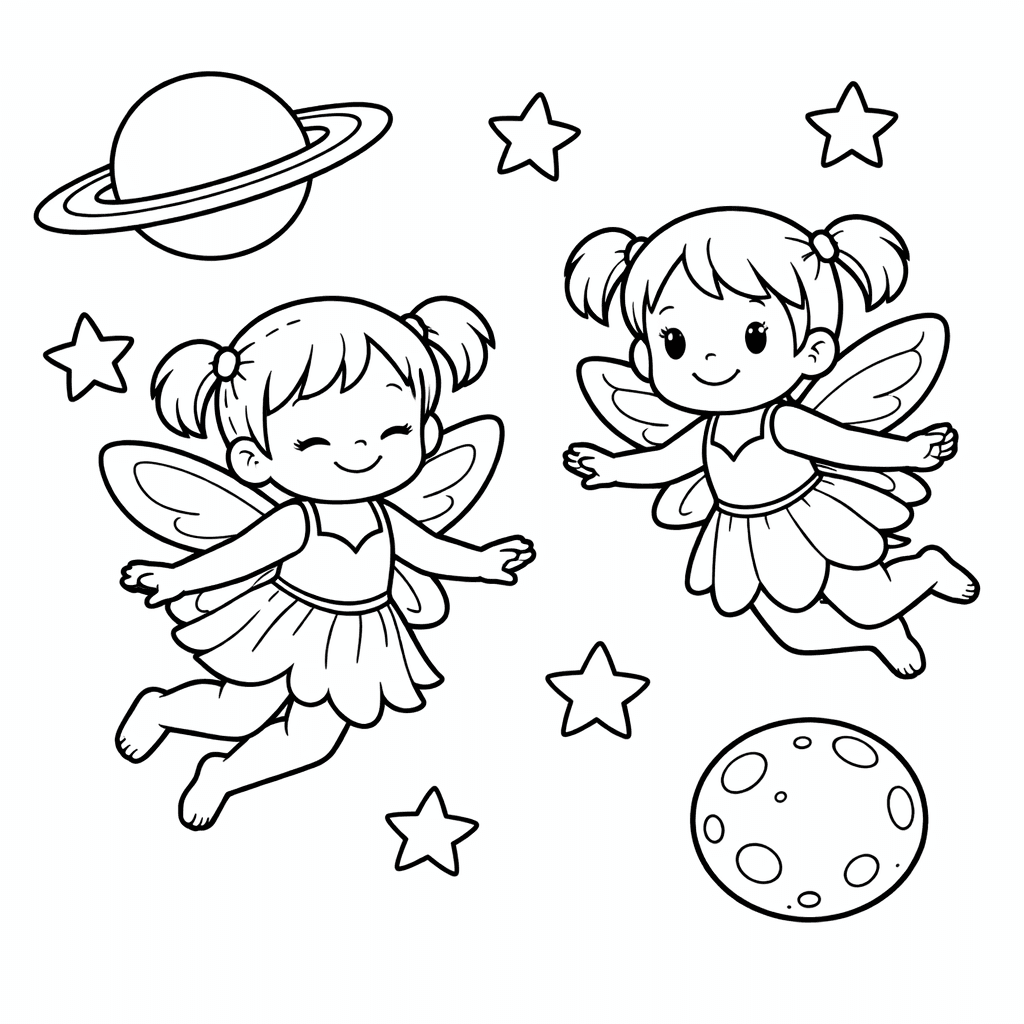
Siblings as fairies exploring space
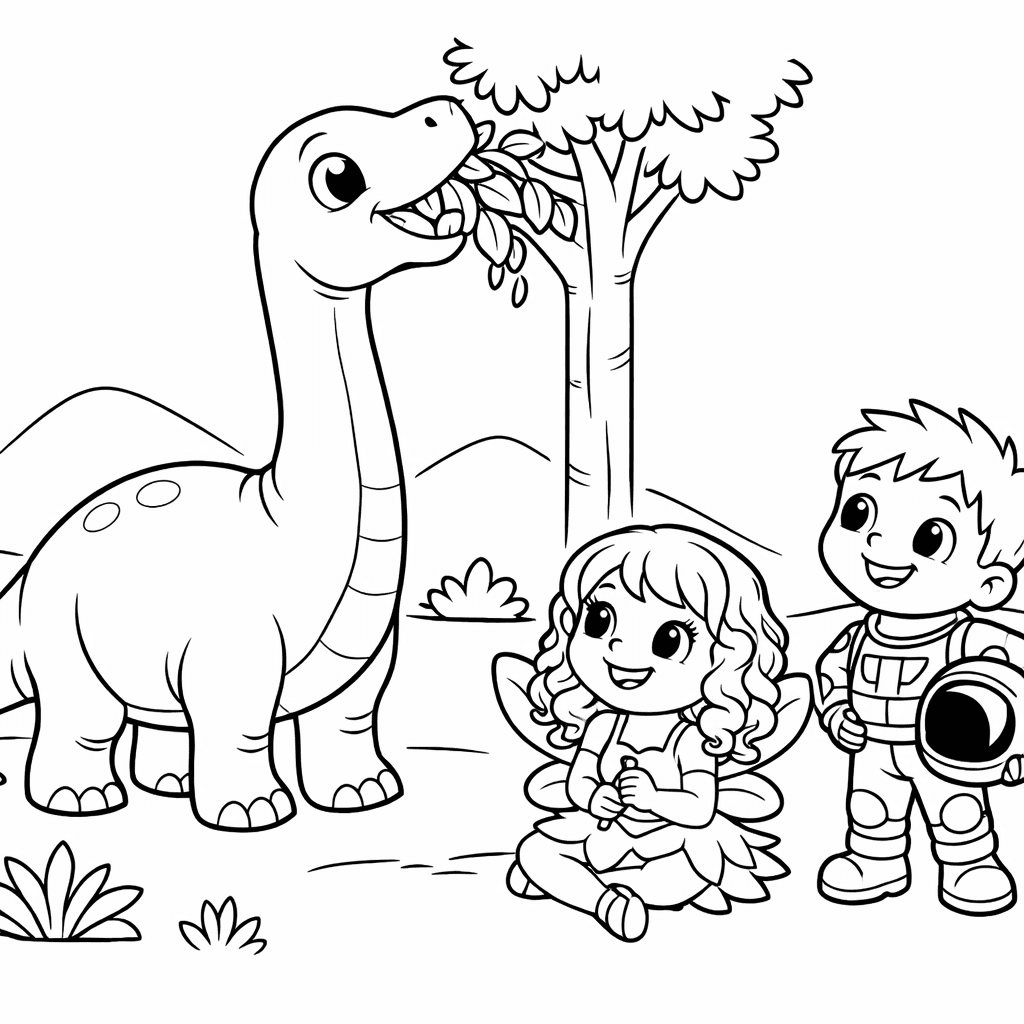
Siblings as a fairy and astronaut meeting dinosaurs
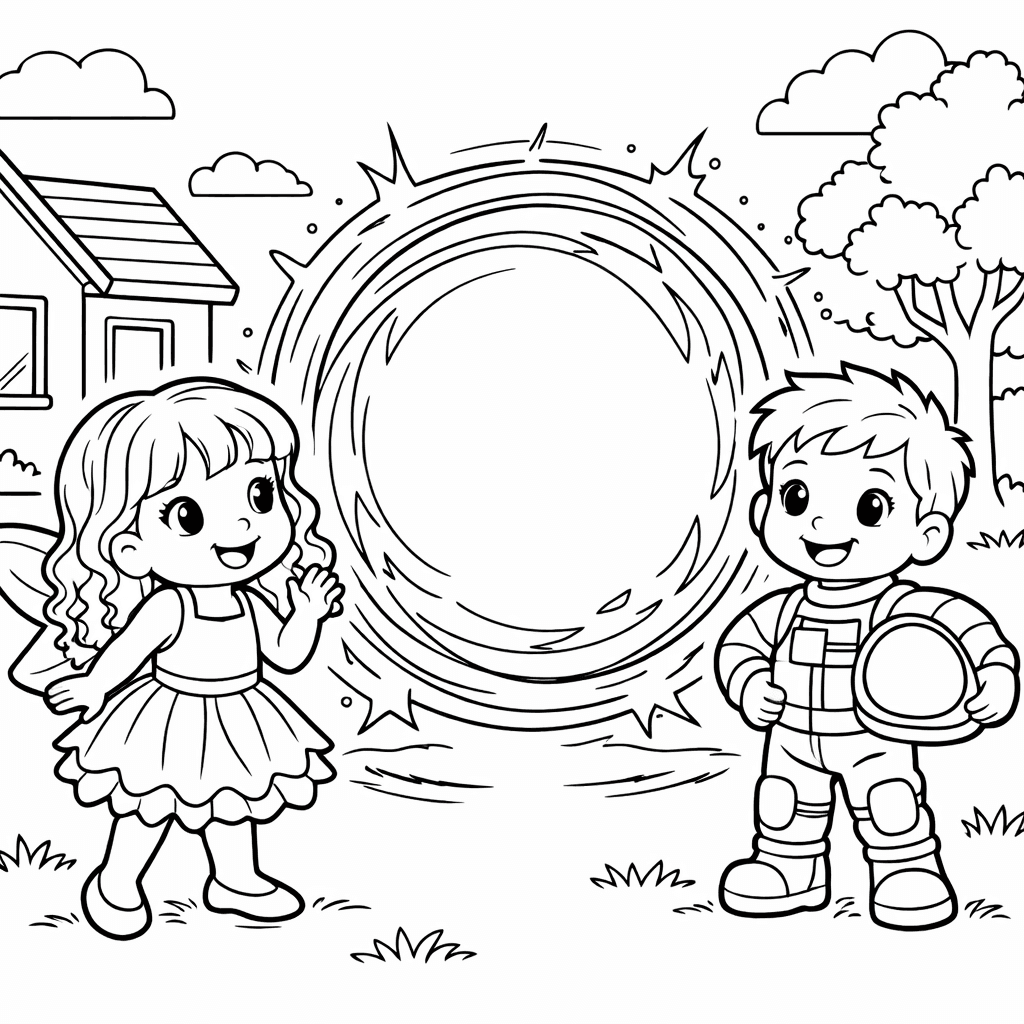
Siblings as a fairy and astronaut stepping through a portal
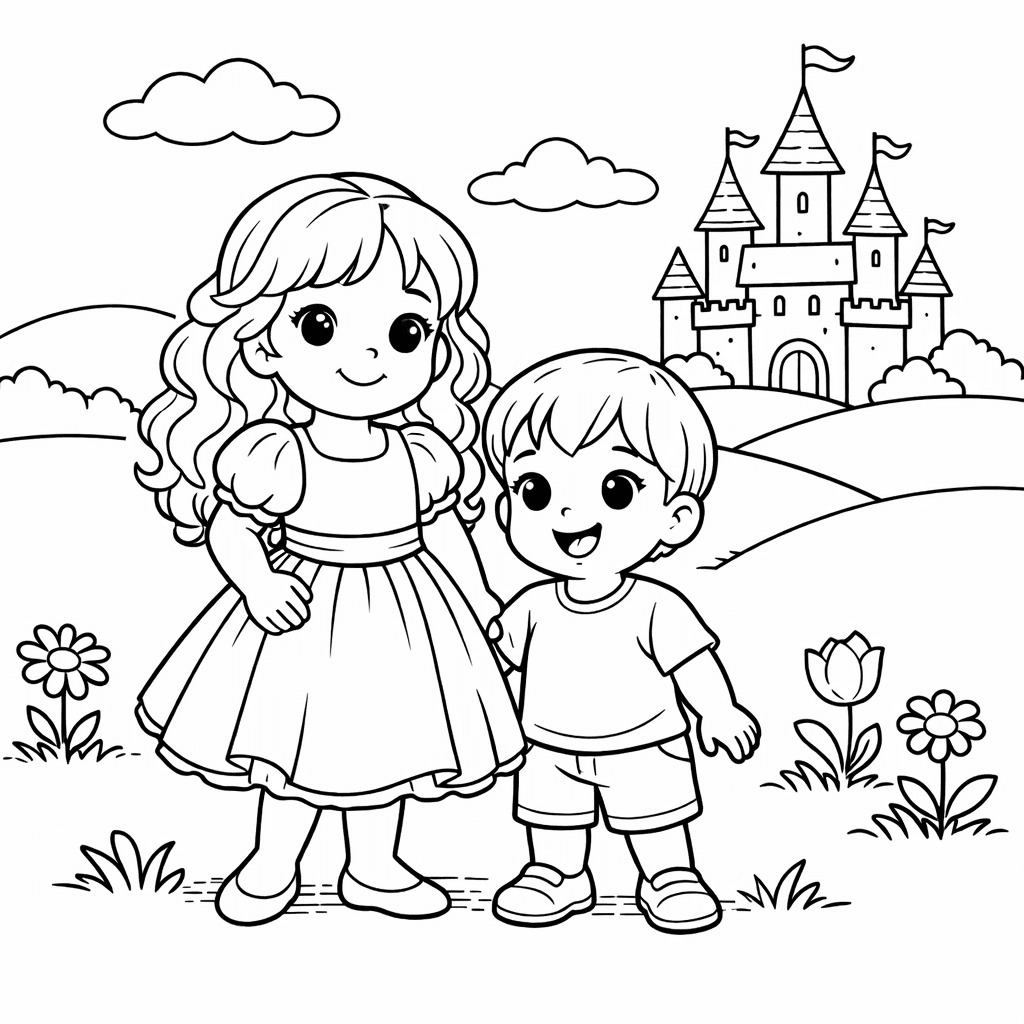
Siblings exploring a fairytale world
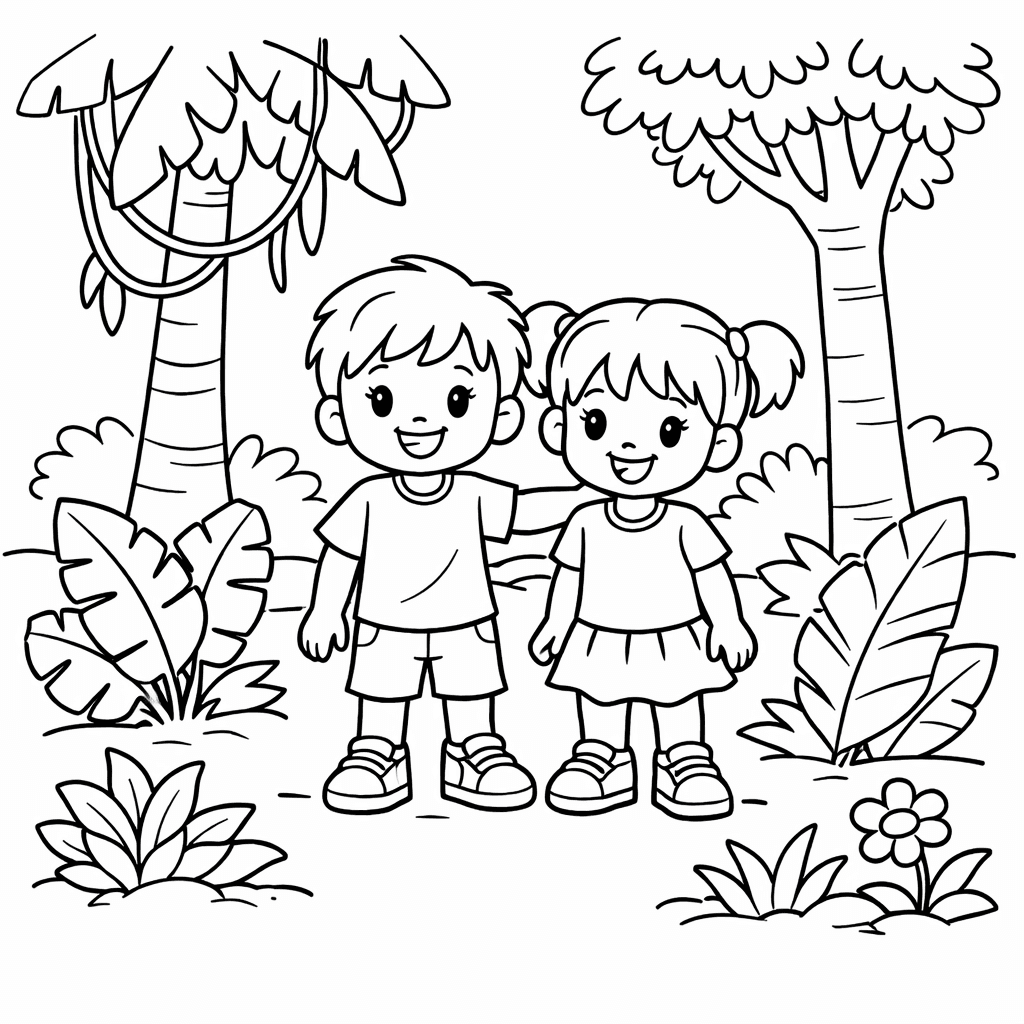
Siblings exploring the jungle
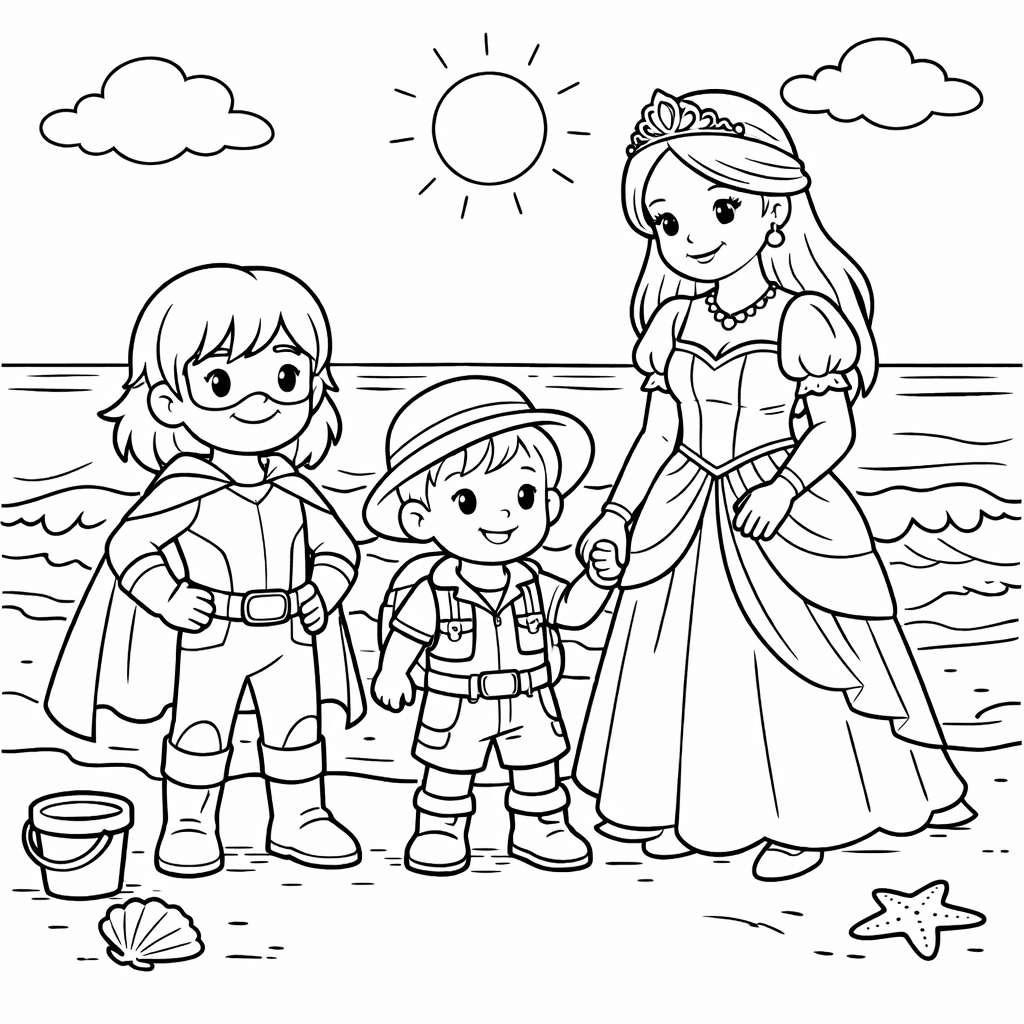
A superhero sister and adventurer brother with their princess mum at the beach
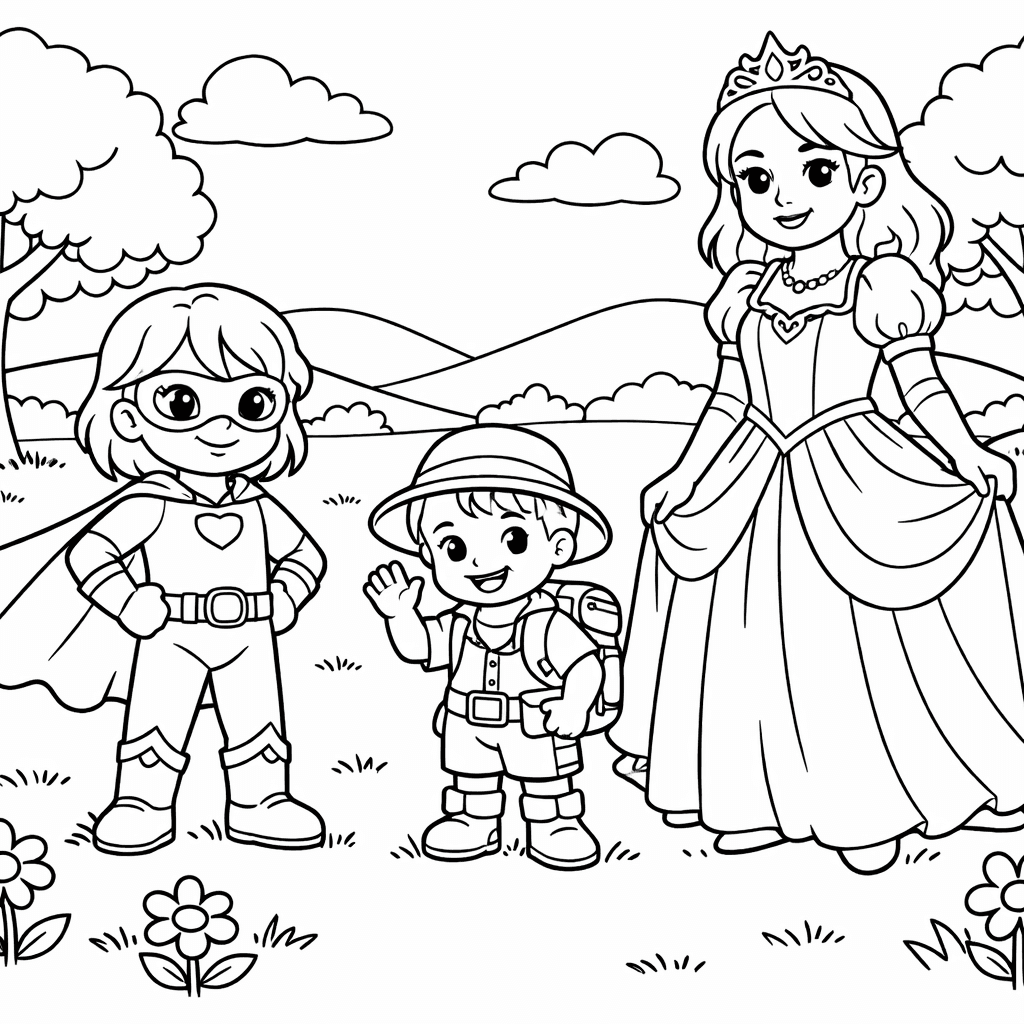
A superhero sister and adventurer brother with their princess mum at the park
Each sibling's character stays consistent across all 20 pages, making it easy for children to identify their own character while appreciating their sibling's unique design.
Shared Scenes with Different Roles
While each child has their own book, imagination-based personalisation opens interesting possibilities for sibling connection.
Creating Complementary Adventures
Parents can create books that feel connected without being identical:
- 🚀 Same theme, different roles: Both siblings explore space, but one's an astronaut and the other's a mission scientist
- 🌊 Complementary themes: One explores underwater while another explores the Arctic—both ocean-related but distinct
- 🏰 Shared world, different adventures: Both in a fantasy kingdom but having different quests
Encouraging Cooperative Play
When siblings have related but individual books, it encourages cooperation:
- 👀 Comparing their adventures and characters
- 📖 Creating joint stories that combine both books
- 🎨 Colouring together while maintaining individual ownership
- 🤝 Sharing without competing
🎨 Sibling Activity Idea
Give each sibling their own personalised book with complementary themes (like space explorer and robot scientist). As they colour, they can create joint stories: "My character just discovered a new planet!" "My character's robot is analyzing it!" This turns individual books into collaborative storytelling.
Practical Benefits for Multi-Child Families
Beyond emotional benefits, imagination-based books offer practical advantages for families with multiple children.
Time and Cost Efficiency
Instead of finding suitable photos for multiple children, just describe each one (5 minutes total vs. 30+ minutes photo hunting).
Describe all children's characters in one sitting while they're excited and engaged together.
Receive digital PDFs for all siblings, print copies as needed, reprint when books get worn or lost.
At $15 AUD per book, creating personalised books for 2-3 siblings remains affordable compared to many toys or activities.
Age Gap Solutions
Siblings with significant age differences have very different needs. Description-based books handle this gracefully.
Wide Age Ranges (e.g., 3 and 9)
When siblings are far apart in age:
- 👶 Younger child: Simpler character story, basic adventure themes
- 👧 Older child: More detailed character background and complex narrative
Both children receive books with similar colouring complexity (appropriate for ages 3-8), but the storytelling depth can match each child's interests and imagination level.
Close Ages (e.g., 5 and 7)
Siblings close in age benefit from:
- 🎨 Similar visual complexity that both can enjoy
- ⏱️ Shared colouring sessions at a similar pace
- 💬 Ability to discuss and compare their books meaningfully
Twins and Triplets: Extra Considerations
Multiples face unique identity challenges. Personalised products need special sensitivity.
Celebrating Individual Identity
Twins and triplets often struggle to establish individual identities separate from their siblings. Imagination-based books support this:
- 🎨 Each twin designs completely different characters
- 🌈 Different themes reflect individual interests
- ✨ No pressure to "match" their siblings
- 📖 Clear ownership—"this is mine, that is yours"
Avoiding "Twin Set" Syndrome
Many twin products treat multiples as a matched set. Description-based books avoid this by:
- 📚 Creating distinctly individual books, not "twin books"
- 🎨 Letting each child make independent creative choices
- 🌟 Celebrating differences rather than similarities
Creating Sibling Books: Step by Step
Here's how to create personalised colouring books for multiple siblings efficiently:
- 1. Gather all children together:
Make creating the books a family activity. Let each child know they'll get their own special book.
- 2. Let each child choose:
Ask each: "If you could be anyone on an adventure, who would you be?" Let them describe or design their character.
- 3. Write descriptions separately:
Spend 2-3 minutes on each child's character description, giving each equal attention and involvement.
- 4. Choose individual themes:
Let each child pick their favourite theme—space, underwater, dinosaurs, or fantasy quests.
- 5. Generate all books:
Create all books at once. Preview, purchase, and receive all PDFs simultaneously.
- 6. Present together:
Give all siblings their books at the same time so everyone feels equally special.
Total time investment: 15-20 minutes for all siblings combined. Total cost: $15 AUD per child.
The Social Share Factor
Sibling-friendly personalised books create natural opportunities for social sharing and bonding.
Sharing Without Conflict
Because each child has their own distinct book:
- ✅ No arguments about whose turn it is
- 🎨 Can colour side-by-side peacefully
- 👀 Can show and compare without jealousy
- 📖 Can share stories about their characters' adventures
Family Bonding Activity
Colouring time becomes family time:
- 🎨 Siblings colour together, each in their own book
- 👨👩👧 Parents can colour too (print extra copies!)
- 💬 Compare creative choices: "I made my dragon purple!"
- ❤️ Build shared memories around individual experiences
Making It Work for Your Family
Every family is different. Here's how to adapt imagination-based personalised colouring books to your sibling dynamics:
For Competitive Siblings
Create completely different books (different themes, different styles) so there's nothing to compare or compete over.
For Close-Bonded Siblings
Consider complementary themes that connect their books (both underwater, but one's a mermaid and one's a submarine captain).
For Different Interest Siblings
Let each child choose completely independently. One might want space adventures while another wants fantasy quests—and that's perfect.
The beauty of description-based personalisation: it adapts to your family's unique dynamics rather than forcing everyone into the same mold.
Frequently Asked Questions About Personalised Books for Siblings
Can I create books for multiple siblings at the same time?
Yes! You can create books for all your children in one session. Each child describes their own character, chooses their own theme, and you can generate all the books simultaneously. This ensures everyone receives their book at the same time, which children appreciate.
Should siblings have matching themes or different ones?
It depends on your children! Some siblings love having complementary themes (both space adventures, but different roles), while others prefer completely different themes to express their individual interests. Let each child choose independently—there's no right answer, just what works for your family.
Will the books be different complexity levels for different ages?
The colouring complexity and illustration style remain consistent across all ages (designed for 3-8 year olds), so siblings of different ages can colour together comfortably. However, you can create more complex storylines and character backgrounds for older children, adding narrative depth while keeping the visual complexity similar.
What if one child is photo-shy but the other isn't?
This is where imagination-based books shine. No photos are needed, so photo-shy children can participate comfortably using descriptions and character building. Both children get equal-quality books without anyone feeling pressured to pose for photos.
How much does it cost to create books for multiple siblings?
Each book costs $15 AUD, regardless of how many you create. So for two siblings it's $30 AUD total, for three siblings $45 AUD, etc. All are delivered as digital PDFs within 10-15 minutes, which you can print as many times as needed.
What about twins or triplets—should their books match?
Many parents of multiples use personalised books specifically to celebrate individual identities. Rather than matching "twin books," let each child design completely different characters and choose different themes. This supports their individual development and gives them clear ownership: "this is mine, that is yours."